

However, the reality is that the DEI has existed for much longer than many believe.
The framework first took root in the 1960s during the civil rights movement in the United States, following the introduction of equal employment and affirmative action laws. Over the decades, it has become increasingly mainstream, moving to the forefront of global debate with movements such as #MeToo, #BlackLivesMatter, #StopAAPIHate, and #LoveisLove. In fact, as it has grown, DEI has broadened its scope to include diverse groups and identities, operating from an intersectional lens that encompasses gender identity, sexual orientation, religion, race/ethnicity, culture, and more. DEI strives to ensure that all individuals represented by these diverse groups feel valued, respected, treated fairly, and supported in being themselves.
And how does this relate to businesses? Why should they care?
Employees want DEI
A company’s efforts to create an inclusive environment are not only an important factor for people deciding where to work, but amplifying these efforts in inclusive employment practices (EIP) are also important drivers of talent retention. According to a Deloitte survey in the United States, 80% of respondents indicated that inclusion is important when choosing an employer, and half of employees wish their companies would invest more in EIP.1 Europeans share a very similar sentiment. According to ManpowerGroup’s Diversity at Work study, 1 in 3 professionals stated that they chose a job offer based on the company’s inclusion policies.2
Also noteworthy is that a sense of inclusion has a direct correlation with employee engagement, according to the 2020 Global Human Capital Trends report. Ninety-three (93%) percent of respondents consider belonging to be an important driver of workplace performance, one of the highest rates of consensus observed in more than a decade of publishing these reports.
3 This makes perfect sense. The more an employee feels their needs are being met, the more satisfied and loyal they will feel toward the company. This leads to lower staff turnover rates and greater employee development, improving engagement and boosting productivity.
Belonging goes beyond DEI; it is essential for a company’s long-term growth.
Top multinational leaders agree. “Diversity, equity, and inclusion accelerate innovation, attract top talent, deepen employee engagement, and improve results. To reap these benefits, this culture must be fostered across the industry,” explains Pat Gelsinger, CEO of Intel.4
The DEI provides economic benefits to companies
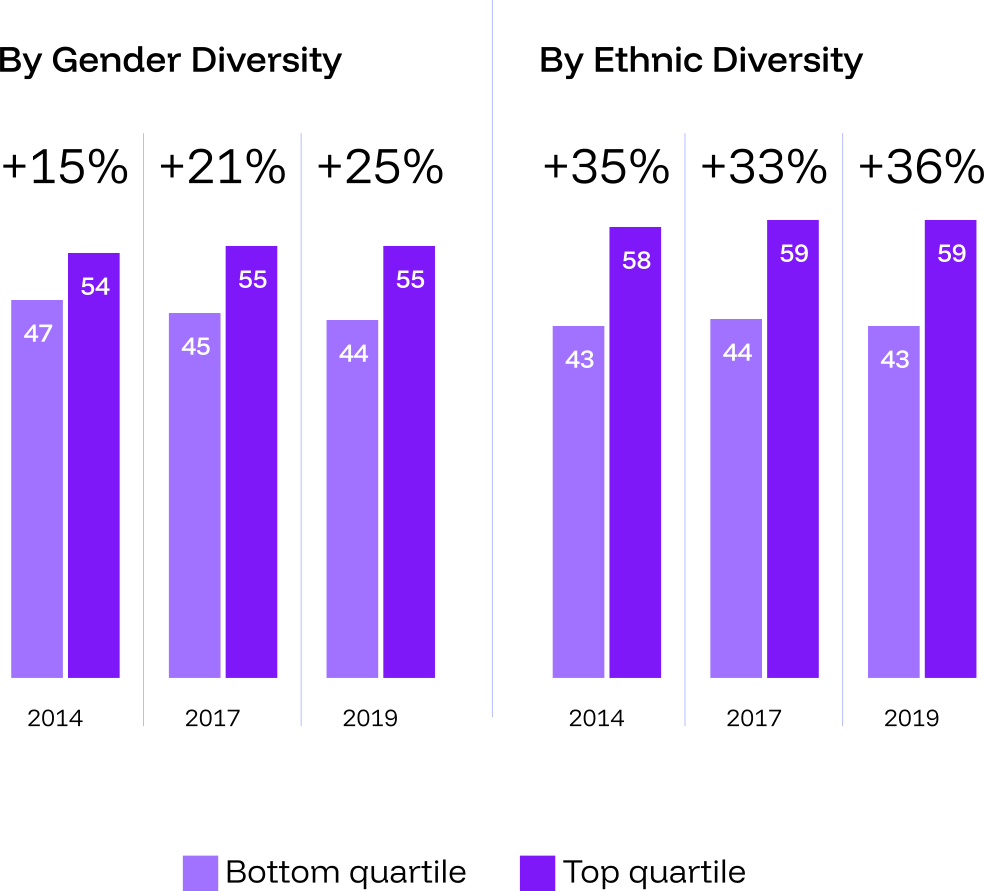
What might once have been a controversial claim is now universally accepted: diverse and inclusive organizations achieve greater financial success. Over five years and three global reports, with data spanning 15 countries and more than 1,000 large companies, McKinsey found that racially, ethnically, and gender-diverse teams consistently outperformed the average financial returns of their industry.5 Specifically, their 2019 analysis revealed that companies in the top quartile for gender diversity in executive teams were 25% more likely to have above-average profitability than companies in the fourth quartile, up from 21% in 2017 and 15% in 2014 (Figure 1).
Chart 1 Probability of superior financial performance
Chart 1 Probability of superior financial performance
Fountain: www.mckinsey.com
n the case of ethnic and cultural diversity, the conclusions were equally compelling. In 2019, companies in the top quartile outperformed those in the bottom quartile by 36%, slightly above the 33% in 2017 and the 35% in 2014.
Many other studies have published similar results. According to the ManpowerGroup report, 8 out of 10 Europeans stated that a diverse and inclusive environment is, by definition, more productive and fosters innovation and intrapreneurship.2 Furthermore, their results demonstrated that diversity has a direct impact on productivity. 51.54% of LGBTQI+ respondents stated that coming out would improve their productivity at work because it would allow them to stop striving to pretend or separate their personal and professional lives. This figure rose to 62.02% for respondents who were already out in their workplace. The impact of diversity on innovation was even more pronounced, with 82.52% of all respondents stating that diverse environments are more innovative.
In fact, promoting DEI is becoming increasingly important for the proper functioning of organizations, whatever their size.
More and more companies are realizing that having diverse staff and teams, from different cultures, genders, sexual orientations, backgrounds and ways of thinking, fosters their creative processes and has a positive impact on their profitability.
With talent shortages at an all-time high, it’s more important than ever to have the right tools to attract and retain a diverse and talented workforce. As we continue to grow and evolve as a society, organizations must be responsive to the changes ahead and the needs of their employees. We share this selection of key areas that are leading the way in developing and improving employee engagement in 2023:
- Increased use of metrics: Worldwide, only 1 in 5 companies has a way to measure the business impact and perceived value of DEI, according to a Workday study.7 Gathering data on organizational diversity (ED) and comparing it with the organization’s goals, mission, and ESG objectives is essential for measuring success and developing new strategies. Delving deeper into an organization’s data can also help shed light on problem areas that might otherwise go unnoticed, such as diversity in management and leadership, recruitment practices, pay equity, retention rates, training and development opportunities, and more.
- Employee Mental Health Support: Employee mental health and well-being projects have increased and will continue to do so in 2023. The COVID-19 pandemic contributed to a global rise in mental health issues, such as stress, depression, anxiety, and isolation. Providing resources to support individuals experiencing mental health challenges creates a nurturing environment that makes them feel safe and accepted, as well as helping them access the care they need.
- Commitment to Transparency: Companies are increasingly expected to be transparent about their DEI goals and progress, both by customers and employees. Fostering an environment that enables open communication and transparency is key to effective DEI programs. A growing number of organizations are choosing to disclose their workforce representation data, leading to more candid conversations and stronger strategies that result in measurable improvements across all sectors.
- Artificial intelligence (AI) and virtual reality: Technology can be a powerful tool to promote DEI, and organizations are looking to use technology in new and innovative ways to advance their DEI initiatives, including using AI to eliminate bias in recruitment processes by removing subjective information such as names and addresses, or employing virtual reality to create immersive diversity training experiences.
Ready to take action? At Gain, we want to be part of the solution with our InsightLinks service. We believe the future of inclusive education lies in the individual steps each organization takes to transform its business from the inside out. That’s why we’ve partnered with external consultants who are at the forefront of inclusive education implementation to provide concrete actions, feedback, and guidelines that our clients can apply to their specific context, creating effective strategies and inclusive environments.
InsightLinks is ready to equip you with the tools you need to become a leader in the DEI space. Contact us to learn more about how we can help you take the first step.
References
- DeHaas DL, Bachus B, Horn E. Unleashing the Power of Inclusion: Attracting and Engaging the Evolving Workforce. Deloitte. 2017. Accessed July 24, 2023. Learn more.
- Diversity at Work. ManpowerGroup. 2021.. Accessed July 24, 2023. Learn more.
- Volini E, Schwartz J, Denny B, Mallon D. 2020 Global Human Capital Trends Report. Deloitte. 2021. Accessed July 24, 2023. Learn more.
- Reiss R. I asked the world’s top CEOS if they’re taking diversity seriously. Here’s why their answers could change your life. Fortune. November 23, 2022. Accessed July 24, 2023. Learn more.
- Dixon-Fyle S, Dolan K, Hunt DV, Prince S. Diversity Wins: How Inclusion Matters. McKinsey & Company. May 19, 2020. Accessed August 4, 2023. Learn more.
- Panou P. Dei in 2023 – how the new DEI initiatives will shape the future of work. Brainz Magazine. February 27, 2023. Accessed July 25, 2023. Learn more.
- Top 5 trends in DEI for 2023. Purdue Global. May 19, 2023. Accessed July 25, 2023. Learn more.
